
Service dogs
- B2+
2-3 x 60-minute classes
Listening activity
You’ll need access to Netflix for this class because I’ll ask you to watch a clip from the documentary television series titled Explained.
Buy me a cup of coffee! ☕
If you found my materials useful and you’d like to support me, buy me a cup of coffee here: ko-fi.com/sipofenglish
Conversation practice
- What are service animals?
- Why do you think you’re not supposed to touch and talk to service dogs?
- Can cats be service animals?
- Do you think service animals should be allowed in hospitals?
- In your opinion, can any breed of dog be a service animal? What breeds are the best?
- Have you heard of some unusual service animals?
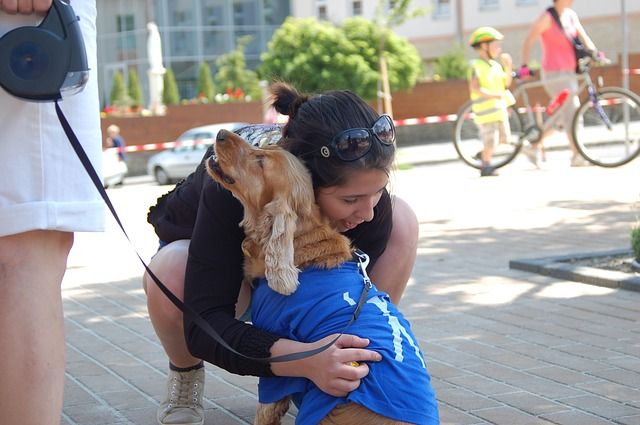
Service animals are working animals that have been trained to perform tasks that assist disabled people. Service animals may also be referred to as assistance animals, assist animals, or helper animals depending on the country and the animal's function.
Source: https://en.wikipedia.org/wiki/Service_animal
Warm-up
Before we watch the clip do these exercises. Don’t worry if you don’t know some of the answers. You’ll learn them as you watch the clip.
Exercise 1 - Grammar
- Not … articulate what she was overstimulated by was so overwhelming for her. (can)
- She battled a lot with self-injurious behaviours. … (bang) her head, … (try) to break windows in our home, … (slam) chairs.
- Basically, all the medical professionals wanted to do … to put her away. (be)
- We had one doctor just … us it would be easier for us to just sign away our rights and put her into foster care. (tell)
- Then the Clarkes … (learn) about a new intervention that … (work) for other children with autism.
- The transformation was instantaneous. She stopped … (hit) herself right away.
- It was as if Una … (not) just sense how Meadow was feeling but really understood it.
Interesting info!
In the sentence ‘Not being able to articulate what she needed was overwhelming for her’. The verb ‘be able to’ with ‘ing’ ending functions as a noun and is used as a subject of the sentence.
When you want to use a verb as a subject of your sentence, add ‘ing’ to it.
e.g. ‘... sugar gave me acne’ (eat) Watch this clip in which Sykkuno changes the verb ‘eat’ into a subject by adding ‘ing’ to it.
Exercise 2 - Word formation
- Everything in her world was just so … (overwhelm).
- She lived in a constant state of … (frustrate).
- The hardest part with her was she … a lot with self-... behaviours. (battle, injury)
- They are considered … support dogs. (mobile)
- The transformation that Meadow made as soon as she got Una was … (instant).
Let’s watch the clip!
Find a documentary TV series titled Explained on Netflix. Go to Season 3, Episode titled Dogs, explained. Begin watching from the 10:00 mark and continue until 12:24. Watch once with subtitles and once without subtitles.

Exercise 3 - Questions
Answer questions about the clip you’ve just watched.
- How many children do Clarks have and how many of them are on the autism spectrum?
- The mum calls Meadow ‘a violet little kiddo’ why?
- What did the medical professionals recommend the parents to do?
- What do dogs do when the kids feel overwhelmed?
- What does the mum mean when she says ‘(the dogs) seem to always get it right’?
Now re-watch the clip and check your answers from exercise 1 and 2. If you didn’t know the answers, no worries. Simply do them as you watch.
Exercise 4 - Prepositions
Listen again and fill in the correct prepositions which were used in this clip.
- Not being able to articulate what she was overstimulated … was so overwhelming.
- Two children are … the autism spectrum.
- It would be easier for us to just sign … our rights, put her … foster care and move … with our lives.
- Ollie will just navigate them … his environment.
- Their dogs know just when to come … for a kiss and when to back …
Interesting vocabulary
Take a look at the words and phrases used in this clip.
Vocabulary part 1
- to articulate /ɑːˈtɪk.jə.leɪt/ - (verb) to express in words
articulate /ɑːˈtɪk.jə.lət/ - (adjective) able to express thoughts and feeling easily and clearly
e.g. She gave a witty, entertaining, and articulate speech.
Here’s an example:
www.loom.comBrooklyn 9-9 S1E3 10:35- overstimulated - too excited or interested in sth
e.g. Children become so overstimulated by heavy schedules of activities that they can’t sleep at night. - autism spectrum - it means that every person with autism experiences this disorder differently
- to battle - to fight but also to try very hard to achieve sth in a difficult situation e.g. He had to battle against prejudice to get a job.
Check out this clip in which Zak George, a dog trainer says that he’s battling with leash pulling.
Click here to read the transcript of this video:
“Impulse control has been one of the challenging things and leash pulling has been intermittently horrible and sometimes good so that’s kind of what we’re battling with now. We’ve been laying a lot of groundwork...”
💡impulse control - the ability to control sudden wishes and desires to do something
💡intermittently - in a way that stops and starts repeatedly
- injurious /ɪnˈdʒʊə.ri.əs/ - a formal way of saying harmful
e.g. Too much alcohol is injurious to your health. - bang - to hit a part of the body against sth
e.g. I banged my head on/against the shelf as I stood up.
- Also, to make a sudden very loud noise
e.g. He could hear sb banging at the door.
e.g. She banged her fist angrily on the table.
In this clip, a detective is solving a murder case. She says ‘bang, bang’ to imply that the perp shot his gun. Take a look!
www.loom.comNetflix - 5 May 2022- slam - to move against a hard surface with force and usually a loud noise
e.g. Close the door carefully, don’t slam it.
e.g. I had to stop suddenly, and the car behind me slammed into the back of me.
Here’s an example of a character who tried to slam the doors. They didn’t close so he screamed ‘slam!’
www.loom.comBrooklyn 9-9 S1E1 16:35- to get/put/lay your hands on sth - to find sth
e.g. I can never lay my hands on a stapler in this office.
In this clip, a lady says that if the teachers had guns, it would be much easier for students to get their hands on them.
youtube.com✂️ school shooting survivors interview17 seconds · Clipped by Justyna Surma · Original video "I spent a day with SCHOOL SHOOTING SURVIVORS (Columbine, Parkland, Reynolds)" by AnthonyPadillaClick here to read the transcript of this video:
“I would be so much easier for someone to get their hands on a gun within a school if we had actual guns.”
”Teachers already are working a job that is almost without a shadow of a doubt being... You know, they're being underpaid and also they're around children all the time.”
- kiddo - an informal term for a kid
e.g. You want a piece of cake, kiddo?
Let’s put that into practice!
→ Do you consider slamming doors rude?
→ Do you know someone who always slams doors? Is it annoying?
→ In the past, were you an adventurous kiddo?
→ Would you agree that nowadays social media cause us to be overstimulated? Does it make you feel overwhelmed?
→ Do you think women still battle against sexism to get jobs?
→ When you feel overstimulated do you find yourself unable to articulate your feelings? Do you bottle them up or let them out?
→ What would you do if someone started banging at your door in the middle of the night?
→ Do you think that kids should be exposed to a wide spectrum of opinions when learning about new topics?
→ Which products were in short supply due to Covid? Did you have problems getting your hands on them?
Vocabulary part 2
Ready for more?
- put sb away - to move someone into a place where people live and are cared for together, such as a mental hospital or old people's home
e.g. In the past, people who suffered from schizophrenia were often put away. - sign sth away - to give up your rights to something by signing a legal document
e.g. Under the treaty, both sides will sign away a third of their nuclear weapons. - foster care - a situation in which for a period of time a child lives with and is cared for by people who are not the child's parents
e.g. The child was sent to foster care after his parents died.
(acc. Mirriam-Webster).
In this clip, Zak the dog trainer says that his dog - Inertia has gotten used to roughhousing (rough play) with some tough, bigger dogs like his other foster dogs. So what’s the difference between his foster dogs and Inertia? Inertia is his dog, while other foster dogs stayed at his house while awaiting adoption.
Click here to read the transcript of this video:
Inertia has gotten used to roughhousing with some very tough bigger dogs like with our other foster dogs over the last year or so.
- consider - to believe someone or something to be, or think of him, her, or it as something
e.g. It is considered bad manners in some cultures to speak with your mouth full of food.
Here’s another great example. A character says, “I consider you guys my friends.”
www.loom.comThe Breakfast Club (1985) - 1:20:00"...what is gonna happen to us on Monday when we're all together again. I consider you guys my friends. I'm not wrong am I?" "No"- mobility - the ability to move freely or be easily moved
e.g. Some neck injuries cause total loss of mobility below the point of injury. - nudge - to push something or someone gently to attract that person’s attention e.g. He nudged the cat off the sofa so that he could sit down.
- to encourage or persuade someone to do something in a way that is gentle rather than forceful e.g. Do you find your parents nudging you in the direction of further study?
In this clip Gandalf says, ‘I was barely involved. All I did was give your uncle a little nudge out of the door.’ He uses the word ‘nudge’ as a noun.
www.loom.comLord of the Rings - The Fellowship of the ringLord of the Rings - The Fellowship of the ringHere’s another clip in which Rachel from Friends gave her friend a nudge.
www.loom.comFriends s3e25Click here to read the transcript of this video:
“I was having a little chat with Bonnie, ang guess what? She happened to bring up who was behind the whole head shaving idea. Now, who was it? Oh, that's right. It was you!”
”That was her idea, I just gave her a nudge.”
”She said you gave her the razor.”
- cue - a signal for someone to do something e.g. They started washing up, so that was our cue to leave the party.
Watch this clip to see how a character used the word ‘cue’ when she decided to go home.
www.loom.comhttps://www.loom.com/share/86f150099a39410c8960f73342c1fb0cClick here to read the transcript of this video:
"One time during a drug bust, he had one of his fingers shot off. He didn't even flinch. He just picked it up and used it to flip off every Puerto Rican in the place."
"And that's my cue. It's late."
"Are you kidding? The old guard drank till dawn, ate some coffee grounds then started the whole day all over again.”
💡a drug bust - a seizure of illegal drugs by the police (acc. thefreedictionary.com)
💡flinch - make a sudden, small movement because of pain or fear (acc. Cambridge Dictionary)
💡flip off - to show the middle finger to sb
💡the old guard - the original or long-standing members of a group, regarded as unwilling to accept change or new ideas (acc. Oxford dictionary)
💡coffe grounds - the used ground beans that remain in a pot or coffee-maker (acc. Collins Dictionary)
This lady talks about verbal cues and filler words.
clips.twitch.tvTinaKitten - verbal cueWatch TinaKitten's clip titled "verbal cue"Click here to read the transcript of this video:
Women tend to have filler words to keep men from interrupting. I actually read about that. It’s cause, like, I don’t know, they’re constantly cut off, you know, so If we say ‘umm’ ‘like like’ that’s like our verbal cue to let people know that we’re not finished talking. Otherwise, they’ll just interject.
💡a filler word - a short word that is used when a speaker is pausing to think about the next sentence, e.g. ‘like’
💡cut off - to interrupt sb when they’re speaking
💡verbal - spoken
💡interject - to say something that interrupts other person speaking
Check out how this dog trainer used the word ‘cues’ when talking about his dog’s behaviour.
youtube.com✂️ cues31 seconds · Clipped by Justyna Surma · Original video "**NEW SERIES!**The FIRST 24 HOURS with a TOTALLY UNTRAINED Pit Bull [Reality Dog Training Episode 1]"...Click here to read the transcript of this video:
Good, I’ve had two years to get to know Inertia at this point and I’m confident that the most we would see from her in a worst-case situation is the type of air nipping that’s quite common with Border Collies and other herding breeds. Because I consistently intervene if I see her feeling uncomfortable Inertia seems to have learnt that it’s ok for her to express her feelings to other dogs but that she doesn’t need to escalate the situation because I’ll always step in to give her a break if she’s feeling a little overwhelmed. So far, George is taking those cues pretty well from Inertia.
- instantaneous - happening immediately, without any delay e.g. an instantaneous response/reply/reaction
- back away - to move backwards away from sb or sth e.g. She saw that he had a gun and backed away.
- to show that you do not support a plan or idea any longer and do not want to be involved with it e.g. The government has backed away from plans to increase taxes.
Let’s put that into practice!
→ Do people who abuse their dogs deserve to be put away for life?
→ Can you give me an example of a politician who promised something but later backed away from it?
→ What’s difficult about fostering dogs?
→ If you were passed over for promotion multiple times, would that be your cue to start looking for a different job? What other situations do you consider cues to quit your job?
→ How would you define good customer service? Do you consider instantaneous responses essential?
→ Do you consider yourself (to be) physically fit, charitable, ambitious, and successful?
→ It is quite common for employers to use nudging techniques and gently encourage them to adopt new behaviours. Google, for example, matches their employees’ donations to charities. Have you noticed some nudging techniques in your workplace? If you find this topic interesting, watch the video I’ve linked below to learn more.
How does Netflix nudge you to watch more?
youtube.com✂️ the way Netflix tries to nudge you to watch more28 seconds · Clipped by Justyna Surma · Original video "Why do we binge-watch? | BBC Ideas" by BBC IdeasDefinitions and examples - https://dictionary.cambridge.org/
Remember!
If a lot of words in this lesson were completely new to you, don’t try to memorise them all. Choose around 5 or 10 that you think you might use in a conversation, and learn those. Come back in a month, re-watch the clip, and choose another 3.
Let’s practise all phrases you’ve learnt so far.
Exercise 5
INTERESTING VOCAB FROM EX. 5
→ a master - also known as a master recording is the official recording of a song, sound or performance (acc. amuse.io)
→ attendance - the fact of going somewhere regularly, e.g. school (acc. Cambridge Dictionary).
→ absenteeism - a situation in which people are not at school or work when they should be (acc. Cambridge Dictionary).
→ uncalled for - unfair and rude, e.g. a remark or a comment
→ exhibit - to show sth, e.g. behaviour
→ empathy - the ability to understand and share the feelings of another (acc. languages.oup.com).
Fill in the gaps. All sentences are quotes from various articles. I’ve linked all of them in case you’d like to see the full context.
"The few women in sports often have to b... against sexism and stereotypes and McCaffrey is no exception".
A hint 🤫
They have to fight sexism.
"A small team of mental health workers provide near-i... response anywhere in Cook County”.
A hint 🤫
They respond almost immediately.
"Artists who release music through a record label typically s... a... the rights to their masters—their actual sound recordings—and give those rights to a label.”
A hint 🤫
Artists give up their rights to the official recordings of their songs.
"When longtime f... parents Darlene and Curtis Bell welcomed four kids into their home in Brooklyn Park, they took a crash-course in preparing pepper soup and fufu. And within 24 hours of arriving at the Bells’ place, the siblings were served their favorite dishes.”
A hint 🤫
Darlene and Curtis take care of kids who are not their biological children.
"Sending parents "n..." letters about their child’s poor school attendance can help reduce absenteeism, a new report has found.”
A hint 🤫
Letters which are supposed to gently remind them that their kids are skipping classes.
"But not everyone has been so lucky in finding the jars in their local store. Let us know in the comments below if you manage to l.. your hands on one locally and what you fill them with.”
A hint 🤫
Tell us if you manage to get them.
"Kids in f... care deserve excellent parenting.”
A hint 🤫
Kids who are taken care of by their temporary guardians, not biological parents.
"When I asked for an explanation, I was met with cold eyes and a rather uncalled for response and that was my c.. to leave.”
A hint 🤫
That was a sign for me to leave.
"In a written statement, Garner b... a... from one of his main campaign promises.”
A hint 🤫
At first he promised something but then he didn’t follow through.
"Cigarette smoking is i... to health.”
A hint 🤫
Smoking is harmful.
"They are more bothered by noise and movement and are easily o....”
A hint 🤫
The noise and movement overwhelms them.
"Narcissism is a personality disorder that exists on a s... Anyone can exhibit signs of narcissism, like a lack of empathy and tendency to be hyper-critical, but 6% of the population is diagnosed with the most extreme form, narcissistic personality disorder”
A hint 🤫
It varies from a person to person.
"He has been charged with three counts of sex abuse, forcible touching, criminal sex act, acting in a manner i... to a child under the age of 17.”
A hint 🤫
Acting in a harmful way for a child.
READING PRACTICE
The quotes from this exercise were taken from the following articles:
1. Jen McCaffrey on navigating the male-dominated field of sportswriting link
2. Mental Health Co-Responder Program link
3. Anita Baker Wants Her Masters Back. link
4. and 7. Minnesota works for quality parenting in foster families link
5. Sending parents ‘nudge’ letters can boost school attendance link
6. Home bargains rolls out ‘cute’ Easter Bunny jars link
8. Nightmare of getting passport in Kenya link
9. Editorial Roundup: Kansas link
10. Cannabis smoke worse than cigarette link
11. Fans of ASMR videos are more sensitive to their surroundings link
12. 4 signs your parent could be a narcissist link
13. Bronx man accused of sexually assaulting 3 girls link
Homework assignment
Read this article about 7 unusual service animals and write a short essay about which animal you think is the best for the job and why.
www.goodnet.org7 Unusual Service Animals - GoodnetThe use of therapy or emotional support animals (ESA) is growing. That's because there is a myriad of benefits of having something soft to cuddle with and tell your problems to. In fact, from the Cornell University College of Veterinary Medicine has shown that just spending a few minutes with animals can significantly reduce stress.Answer the questions from exercise 3 again in a written form but this time try using as many new phrases from the ‘interesting vocabulary’ section.
Answer key
Exercise 1 - Grammar
- Not being able to articulate what she was overstimulated by was so overwhelming for her.
- She battled a lot with self-injurious behaviours. Banging her head, trying to break windows in our home, slamming chairs.
- Basically, all the medical professionals wanted to do was to put her away.
- We had one doctor just tell us it would be easier for us to just sign away our rights and put her into foster care.
- Then the Clarkes learned/learnt about a new intervention that had worked for other children with autism.
- The transformation was instantaneous. She stopped hitting herself right away.
- It was as if Una didn’t just sense how Meadow was feeling but really understood it.
Exercise 2 - Word formation
- Everything in her world was just so overwhelming.
- She lived in a constant state of frustration.
- The hardest part with her was she battled a lot with self-injurious behaviour.
- They are considered mobility support dogs.
- The transformation that Meadow made as soon as she got Una was instantaneous.
Exercise 4 - Prepositions
- Not being able to articulate what she was overstimulated by was so overwhelming.
- Two children are on the autism spectrum.
- It would be easier for us to just sign away our rights, put her into foster care and move on with our lives.
- Ollie will just navigate them through his environment.
- Their dogs know just when to come in for a kiss and when to back away.
Exercise 5 - Quotes
- battle
- instantaneous
- sign away
- foster
- nudge
- lay
- foster
- cue
- backed away
- injurious
- overstimulated
- spectrum
- injurious